What is Universal Design for Learning (UDL)?
UDL is a framework to improve and optimize teaching and learning based on what we know about the human brain. Each brain is made of billions of interconnected neurons that form unique pathways. Like fingerprints, no two brains are alike.
Educators face daily challenges in planning for diverse learners. However, learner variability is predictable, and we’ve developed prompts and principles to support educators – the CAST UDL Guidelines.
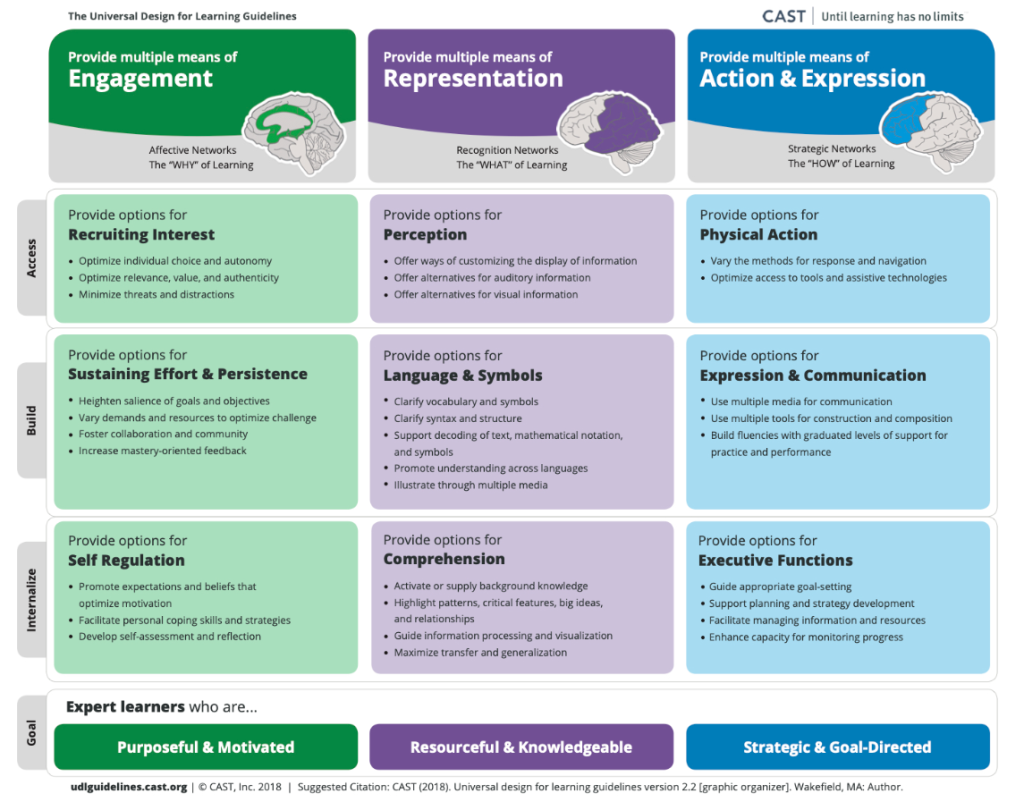
The CAST UDL Guidelines help educators address the diversity in learning in three main categories:
- Engagement (the why of learning): recruiting interest, sustaining effort and persistence, and self-regulation.
- Representation (the what of learning): perception, language and symbols, and comprehension.
- Action & Expression (the how of learning): physical action, expression and communication, and executive function.
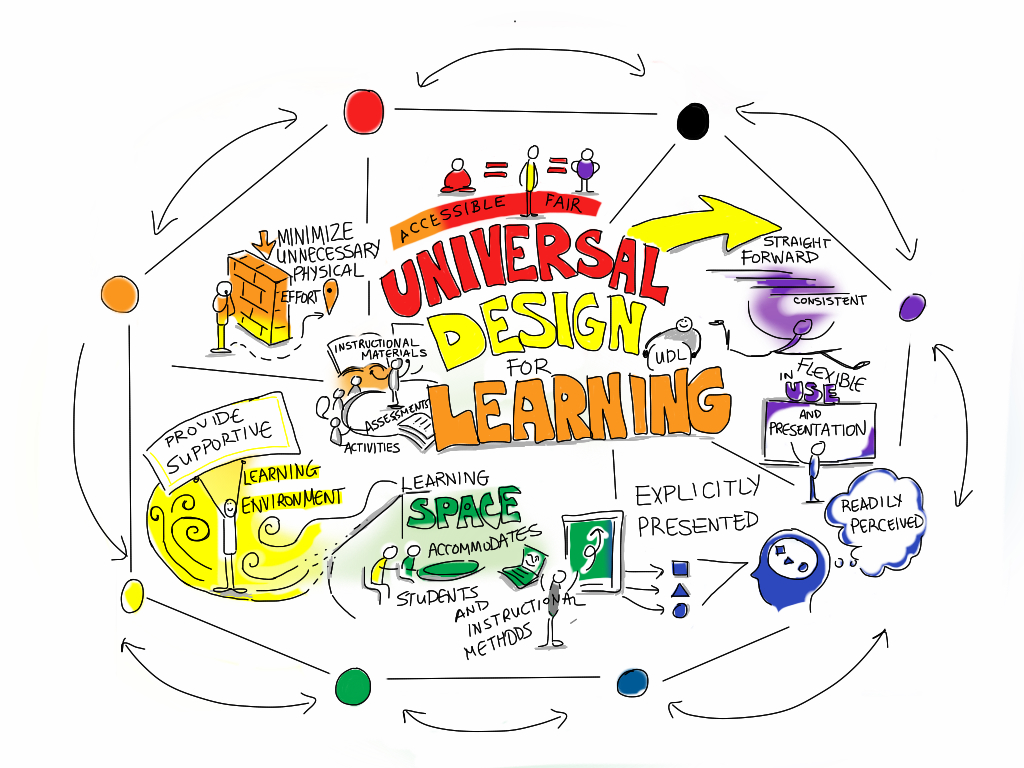
UDL Principles
The three research-based principles of UDL provide a framework for optimizing learning for all students.
1. Multiple Means of Engagement
Provide options and a variety of ways for students to interact with the course content, their classmates, and you, as the instructor. Allow students to make choices in as many aspects of the course as possible, thus building their autonomy and self-determination.
2. Multiple Means of Representation
Present content in different formats and allow students to choose the formats in which they learn best. Provide text options when audio is used and audio or text options where visuals are used. This allows students to gain access to content via the methods most accessible to them.
3. Multiple Means of Action & Expression
Create different ways for students to demonstrate understanding. Certain types of assessments can create barriers for some learners. Providing choice helps them avoid those barriers and better demonstrate what they know. Also, offer different ways for students to communicate and participate during class.
Universal Design for Learning Guidelines
Visit the CAST website for an accessible, interactive version of these guidelines.